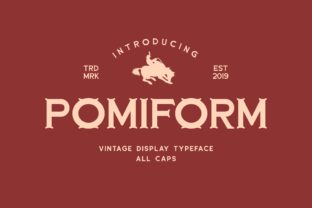
Pomiform: A Nostalgic Display Font with Modern Appeal
Pomiform is a display serif font that blends the warmth of vintage typography with the clarity needed for contemporary design. Its chunky, original character set evokes a sense of nostalgia while maintaining readability and versatility across various applications. For designers, marketers, and content creators seeking a distinctive visual identity, Pomiform offers a compelling option that stands out without sacrificing usability.
At its core, Pomiform is designed to command attention. The font’s bold strokes and slightly irregular shapes give it a handcrafted feel, reminiscent of old signage, typewritten documents, or retro logos. This aesthetic makes it particularly effective in branding, editorial design, and digital marketing where a strong visual presence is essential. However, its charm extends beyond just style—it also functions well in practical contexts.
Key Characteristics of Pomiform
The defining feature of Pomiform is its unique balance between structure and spontaneity. Unlike many traditional serif fonts that adhere strictly to historical forms, Pomiform introduces subtle variations in stroke weight and letter spacing. These nuances contribute to a more dynamic appearance, making it ideal for projects that require a humanized, artisanal touch.
Its letterforms are intentionally robust, with thick vertical strokes and thin horizontal lines that create a striking contrast. This design choice enhances legibility at larger sizes, making Pomiform suitable for headings, titles, and banners. The font also includes a range of ligatures and alternate characters, offering flexibility for custom typography.
One of Pomiform’s strengths lies in its ability to convey both warmth and authority. The rounded terminals and slight imperfections in the glyphs add a sense of approachability, while the overall weight and proportion project confidence. This duality makes it adaptable to a wide range of brand voices—from playful startups to established enterprises looking to refresh their visual language.
Practical Applications and Performance
In real-world use, Pomiform excels in scenarios where visual impact is key. It works well for logo design, social media graphics, and promotional materials where a memorable, distinctive look is desired. Its boldness ensures that it remains visible even in low-resolution environments, such as mobile screens or printed flyers.
When used in web design, Pomiform can be an effective tool for creating eye-catching headlines or section dividers. However, due to its heavier weight, it may not be the best choice for long blocks of body text. Designers should pair it with a complementary sans-serif or serif font to maintain readability and hierarchy.
For print projects, Pomiform’s texture and detail shine. Its slightly textured appearance can add depth to posters, packaging, or stationery, giving them a tactile quality that resonates with audiences. The font also supports multiple language scripts, making it a viable option for international brands or multilingual content.
Strengths and Usability
Pomiform’s strength lies in its ability to evoke emotion through typography. The font’s nostalgic undertones can help brands connect with audiences on a personal level, especially those targeting consumers who appreciate retro aesthetics or artisanal craftsmanship. This emotional resonance can be a powerful tool in storytelling and brand positioning.
From a usability standpoint, Pomiform is relatively straightforward to implement. It comes in a variety of weights and styles, allowing for greater customization. The font’s consistent x-height and uniform spacing ensure that it scales well across different sizes and formats. Additionally, its clean outlines make it suitable for both digital and print mediums without significant loss of quality.
Flexibility is another notable aspect of Pomiform. While it is primarily a display font, its versatility allows it to be used in a broader range of contexts when applied thoughtfully. For instance, it can serve as a subheading in a magazine layout or as a focal point in a presentation deck. Its adaptability makes it a valuable addition to any designer’s toolkit.
Who Benefits Most from Pomiform?
Entrepreneurs and small business owners looking to establish a unique brand identity will find Pomiform particularly useful. Its distinctiveness helps businesses stand out in crowded markets, especially in industries like food, fashion, or creative services where visual appeal plays a critical role.
Marketers and advertisers can leverage Pomiform to craft compelling visuals that capture attention and reinforce brand messaging. Whether designing a campaign poster, a social media ad, or a landing page, the font’s boldness and character can enhance the overall impact of the message.
Content creators, including bloggers, YouTubers, and podcasters, may also benefit from using Pomiform in their visual assets. It can elevate the look of thumbnails, banners, or promotional materials, helping to build a more professional and cohesive brand image.
Considerations and Limitations
While Pomiform has many advantages, it is not a one-size-fits-all solution. Its bold, chunky design may not align with minimalist or modern aesthetics that prioritize simplicity and clarity. In such cases, a cleaner font might be more appropriate.
Additionally, because of its heavy weight, Pomiform may require careful typographic adjustments when used in digital interfaces. Overuse or improper pairing can lead to visual clutter, reducing the effectiveness of the design. Users should test the font in different contexts to ensure it meets their specific needs.
Finally, while Pomiform is visually appealing, it may not be the best choice for projects requiring high levels of accessibility. Its irregular shapes and thick strokes could pose challenges for readers with certain visual impairments. In such cases, alternative fonts with higher legibility should be considered.
Conclusion
Pomiform is more than just a nostalgic nod to the past—it’s a versatile and effective display font that brings character and personality to modern design. Its combination of boldness, warmth, and adaptability makes it a valuable asset for professionals across various industries. By understanding its strengths and limitations, users can harness its potential to create visually engaging and emotionally resonant work. Whether used for branding, marketing, or editorial design, Pomiform offers a fresh and distinctive approach to typography that can elevate any project.