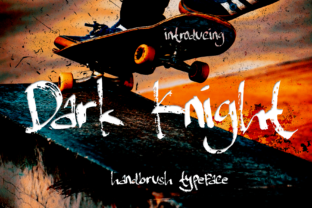
Dark Knight: A Display Font That Commands Attention—Without Saying a Word
Dark Knight isn’t just another bold font you find in a free Google Fonts dropdown. It’s an experimental display typeface built for moments when clarity needs gravity, and presence can’t be negotiated. Think of it as the visual equivalent of stepping into a room and silencing it—not with volume, but with weight, intention, and unmistakable character. Its sharp angles, high contrast, and tightly tuned spacing aren’t decorative flourishes; they’re functional choices that make text feel grounded, decisive, and impossible to scroll past.
Where Dark Knight Fits—and Where It Doesn’t
You won’t want Dark Knight for body copy on a blog post or a multi-page product manual. Its strength lies in controlled bursts: headlines, logos, posters, packaging, social media banners, presentation slides, and short-form digital signage. It thrives where you need instant recognition and emotional resonance—not sustained reading.
That distinction matters. A freelance designer choosing Dark Knight for a band’s album cover isn’t chasing trendiness; they’re matching typography to attitude. A small-batch coffee roaster using it on a limited-run bag isn’t just “making it look cool”—they’re signaling craftsmanship, intensity, and a no-compromise approach to flavor. In both cases, Dark Knight works because it amplifies meaning already present in the context—not because it’s loud, but because it’s aligned.
For Educators & Workshop Leaders
A high school history teacher uses Dark Knight for slide titles like “The Fall of the Roman Republic” or “Revolutionary Voices”. Students don’t just read the words—they register tone. The font subtly reinforces gravity and consequence, supporting narrative without over-explaining. It’s not about “making history exciting.” It’s about letting the subject matter speak with appropriate authority.
For Bloggers & Content Creators
When a personal finance blogger launches a new series called “Unfiltered Numbers,” they pair a clean sans-serif body font with Dark Knight for the series banner and episode headers. Readers instantly grasp this isn’t generic advice—it’s direct, unvarnished, and built for people who’ve heard enough sugarcoating. The font becomes part of the brand voice, not just decoration.
For Small Business Owners
A local tattoo studio adds Dark Knight to their Instagram highlights cover (“Custom Work,” “Aftercare,” “Book Now”). It doesn’t scream “edgy”—it feels intentional, permanent, and quietly confident. Clients scrolling past notice the consistency: same font on their storefront sign, same weight in their booking confirmation email header. That repetition builds subconscious trust—not because it’s flashy, but because it feels *deliberate*.
For Marketers & Product Launches
When a sustainable apparel brand drops a new line made from ocean plastic, their campaign tagline—“Worn, Not Wasted”—appears in Dark Knight across billboards, email headers, and landing page hero sections. The font’s structural rigidity mirrors the material’s durability; its starkness reflects the brand’s transparency. It doesn’t soften the message—it holds space for it.
What to Consider Before You Use Dark Knight
First, ask: Is this the right moment for emphasis—or is it noise? Dark Knight earns attention. If your page already has three competing focal points (a video autoplay, a pop-up, and a flashing CTA), adding Dark Knight to a headline may dilute, not strengthen, impact.
Second, consider accessibility. Its high contrast and tight letterfit work beautifully at large sizes—but avoid using it smaller than 36px for headings, and never for interface labels or navigation links. Screen readers don’t care how bold your font looks, but users relying on zoom or dyslexia-friendly settings do care whether letters stay distinct and legible.
Third, pairing matters. Dark Knight pairs best with neutral, highly readable fonts—think modest sans-serifs (Inter, Helvetica Neue, or even system fonts like -apple-system) or restrained serifs (Merriweather, Lora). Avoid other display fonts, script fonts, or anything with competing personality. Think of Dark Knight as the lead vocalist: it needs a rhythm section, not another frontperson.
Fourth, licensing. Dark Knight is often released under SIL Open Font License or similar permissive terms—but always verify the source. If you’re embedding it in a SaaS dashboard or selling templates that include it, double-check commercial use permissions. A $5 licensing oversight can cost far more in legal time or redesign later.
Why It Sticks—Beyond Aesthetics
People remember how things felt before what they said. Dark Knight lingers because it creates a micro-experience: the slight pause before reading, the unconscious nod of recognition, the sense that something here was *meant* to be seen. That’s not magic—it’s typography doing its job well.
A photographer uses it on her portfolio site’s homepage banner: “Still Life, Still Moving.” The font’s tension between stillness (rigid geometry) and motion (dynamic negative space) mirrors her work. Visitors don’t need to read her bio to get her point of view.
A nonprofit running a voter registration drive uses Dark Knight for yard signs: “Your Name. Your Voice. Your Vote.” Short. Uncompromising. Human-scale. No exclamation points needed—the font carries the urgency.
Even hobbyists benefit. Someone restoring vintage motorcycles might use Dark Knight on a workshop wall print: “Tighten. Test. Trust.” It doesn’t shout. It affirms. It matches the precision and respect embedded in the craft.
Final Thought: Strength Isn’t Always Loud
Dark Knight doesn’t beg for attention—it assumes it, then delivers substance worthy of that assumption. That’s rare. Most bold fonts lean on size or saturation to dominate. Dark Knight dominates through structure, restraint, and quiet confidence. It’s the difference between shouting a slogan and etching it in stone.
If your message needs to land with weight—if your brand stands for clarity over clutter, conviction over compromise, or impact over ornament—Dark Knight isn’t just a font choice. It’s a strategic alignment. Used thoughtfully, it doesn’t dress up your content. It deepens it.