Aduhai: A Display Font for Distinctive Visual Impact
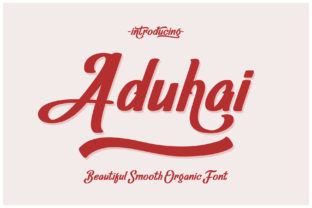
Aduhai is a contemporary display typeface designed with strong visual character and relaxed confidence. It belongs to the geometric sans-serif category but distinguishes itself through subtle irregularities—slight asymmetries in stroke weight, gentle curvature in terminals, and a rhythm that feels hand-informed rather than strictly algorithmic. Unlike utility-focused text fonts, Aduhai is intended for prominence: headlines, logos, posters, and short-form digital banners where immediate recognition and stylistic cohesion matter more than extended readability.
Why Designers Consider Aduhai
Designers often seek typefaces that reinforce brand personality without requiring extensive custom illustration. Aduhai appeals in contexts where “effortless cool” aligns with audience expectations—think independent fashion labels, creative studios, music releases, or lifestyle publications targeting digitally native adults. Its appeal isn’t rooted in novelty alone, but in how its balanced proportions and restrained quirks support tone without overwhelming content.
It’s also compact in file size and widely compatible across modern platforms, supporting standard Latin characters and common diacritics. This makes integration into web projects straightforward when used via @font-face or reputable font hosting services. No complex licensing tiers or variable-axis configuration are required for basic implementation.
Practical Benefits and Realistic Tradeoffs
Aduhai excels in legibility at larger sizes (36px and up) and maintains clarity even when rendered on high-DPI screens. Its open counters and generous x-height improve recognition at a glance, especially against textured or busy backgrounds. The font includes both uppercase and lowercase forms, offering flexibility for typographic hierarchy—though its lowercase letters are best deployed where contrast and scale support their expressive nature.
However, Aduhai is not optimized for body text. Its distinctive letterforms—such as the tilted crossbar in the “e” or the tapered terminals on “a” and “c”—introduce visual noise over long passages. Readers may experience fatigue or reduced scanning efficiency in paragraphs exceeding two lines. Similarly, tight letter spacing in some weights can reduce clarity in all-caps settings unless manually adjusted.
Another consideration is language support. While Aduhai covers Western European languages adequately, it lacks extended Cyrillic, Greek, or East Asian character sets. Projects requiring multilingual branding—especially those spanning English, French, Spanish, and German—should verify glyph coverage before committing to Aduhai for primary messaging.
When Aduhai Fits Well
Aduhai works effectively in scenarios where typography serves as a deliberate stylistic anchor:
- Brand identity systems where headline treatment reinforces a confident, understated aesthetic—particularly for startups or cultural initiatives prioritizing authenticity over formality.
- Digital campaigns with short, impactful copy: social media ads, email headers, or hero sections where message brevity matches the font’s expressive economy.
- Print collateral such as limited-run posters, vinyl sleeve art, or editorial feature titles where tactile quality and visual cohesion outweigh functional versatility.
- UI elements with high visual priority, like app onboarding screens or dashboard welcome messages—provided the interface context supports typographic emphasis without sacrificing accessibility.
In each case, success depends less on the font itself and more on alignment between Aduhai’s expressive range and the communication goal. It performs best when paired with neutral, highly legible text fonts (e.g., Inter, Lato, or Source Sans Pro) to create clear typographic contrast.
When Alternatives May Be More Appropriate
Aduhai is not a universal solution. Consider alternatives if your project emphasizes:
- Accessibility-first requirements: Fonts with higher contrast ratios, more consistent stroke modulation, and tested WCAG compliance—like IBM Plex Sans or Roboto—may better serve users relying on screen readers or low-vision accommodations.
- Multilingual scalability: If your audience spans multiple scripts or requires robust diacritic support beyond basic Latin, fonts like Work Sans or Manrope offer broader language coverage without sacrificing display strength.
- Dynamic or responsive environments: In interfaces where text resizes fluidly across breakpoints—or where performance budgets restrict custom font usage—system fonts or lightweight web-safe options may yield more predictable results.
- Formal or institutional tone: Legal, academic, or governmental communications often benefit from typographic neutrality. Aduhai’s expressive qualities may unintentionally undercut perceived authority or gravitas in those contexts.
Making an Informed Choice
Evaluating Aduhai shouldn’t begin with aesthetics alone. Start by clarifying your core objective: Is the goal to signal a specific mood? Support brand differentiation? Or ensure functional clarity across devices and user groups?
Test Aduhai early—not just in mockups, but in real environments. Render sample headlines alongside your intended body font on mobile and desktop. Check contrast ratios using browser developer tools. Verify how it behaves in your CMS or design system, especially if you’re applying it to dynamic content like blog titles or product names.
Licensing is another practical checkpoint. Aduhai is available under open-source licenses (often SIL Open Font License), but confirm whether your use case—especially commercial products or embedded applications—requires attribution or imposes redistribution conditions. Some platforms bundle it with extended permissions; others require direct download and self-hosting.
Finally, consider longevity. Display fonts cycle in and out of trend relevance faster than text fonts. Aduhai’s restrained execution gives it staying power compared to more exaggerated alternatives, but it still carries stylistic associations. Ask whether its current resonance aligns with your brand’s anticipated evolution over the next 2–3 years.
In summary, Aduhai offers a compelling balance of personality and precision for targeted visual roles. It rewards thoughtful pairing and intentional application—not broad substitution. When matched to the right context, it supports clarity of voice without demanding attention for its own sake. When mismatched, its strengths become liabilities. The most effective use of Aduhai begins not with admiration, but with alignment: between its capabilities, your audience’s expectations, and your project’s functional and expressive priorities.